

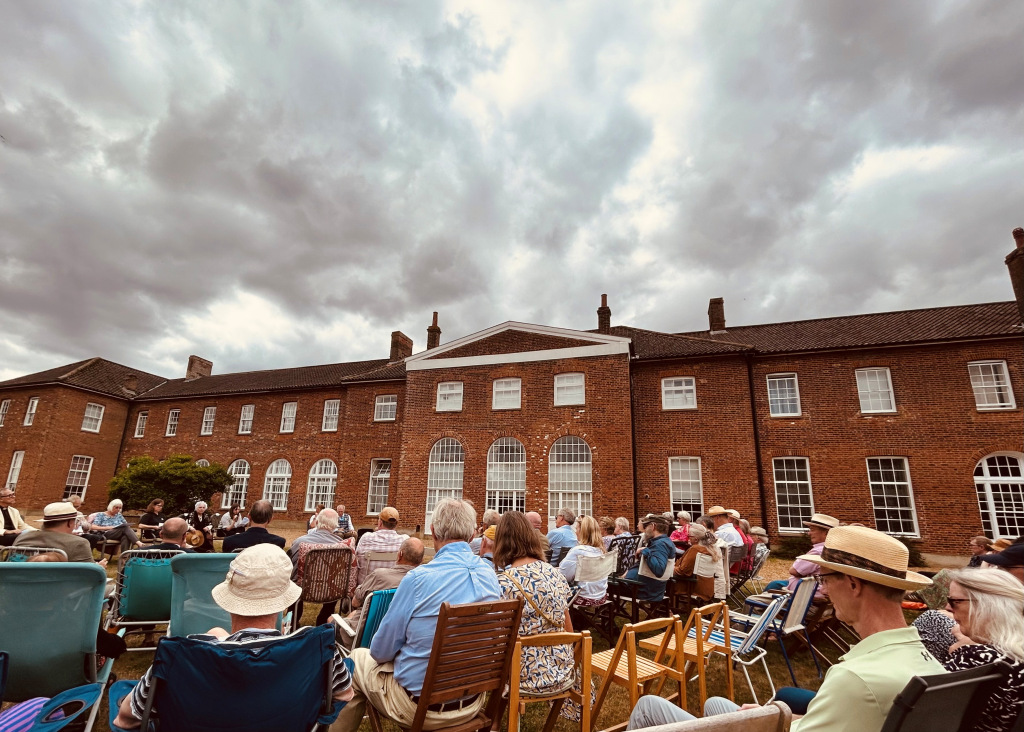
This year marked the 250th anniversary of the Act of Incorporation that allowed 23 parishes in the Forehoe Hundred to build a House of Industry on Wicklewood Common. Today, under the name of St Georges, the original building is home to 21 families.
Many of the current residents considered it important to mark this special 250th anniversary, so a committee was formed to commemorate it appropriately. We decided on three main courses of action: to apply for a Historic England blue plaque, and to host two events, each centred on an artefact: a time capsule and a bell.
The bell and its associated commemorative plaque were thought to be the most appropriate and permanent way to remember former residents whose daily lives would have been ordered by a very similar bell. Unfortunately, the blue plaque nomination scheme has yet to open this year, so the committee will apply as soon as it does.
The first of our events saw children from Wicklewood Primary School bury a time capsule (see Dr Matthews's article elsewhere in this edition), before the committee's main event took place two days later, on 4th July.
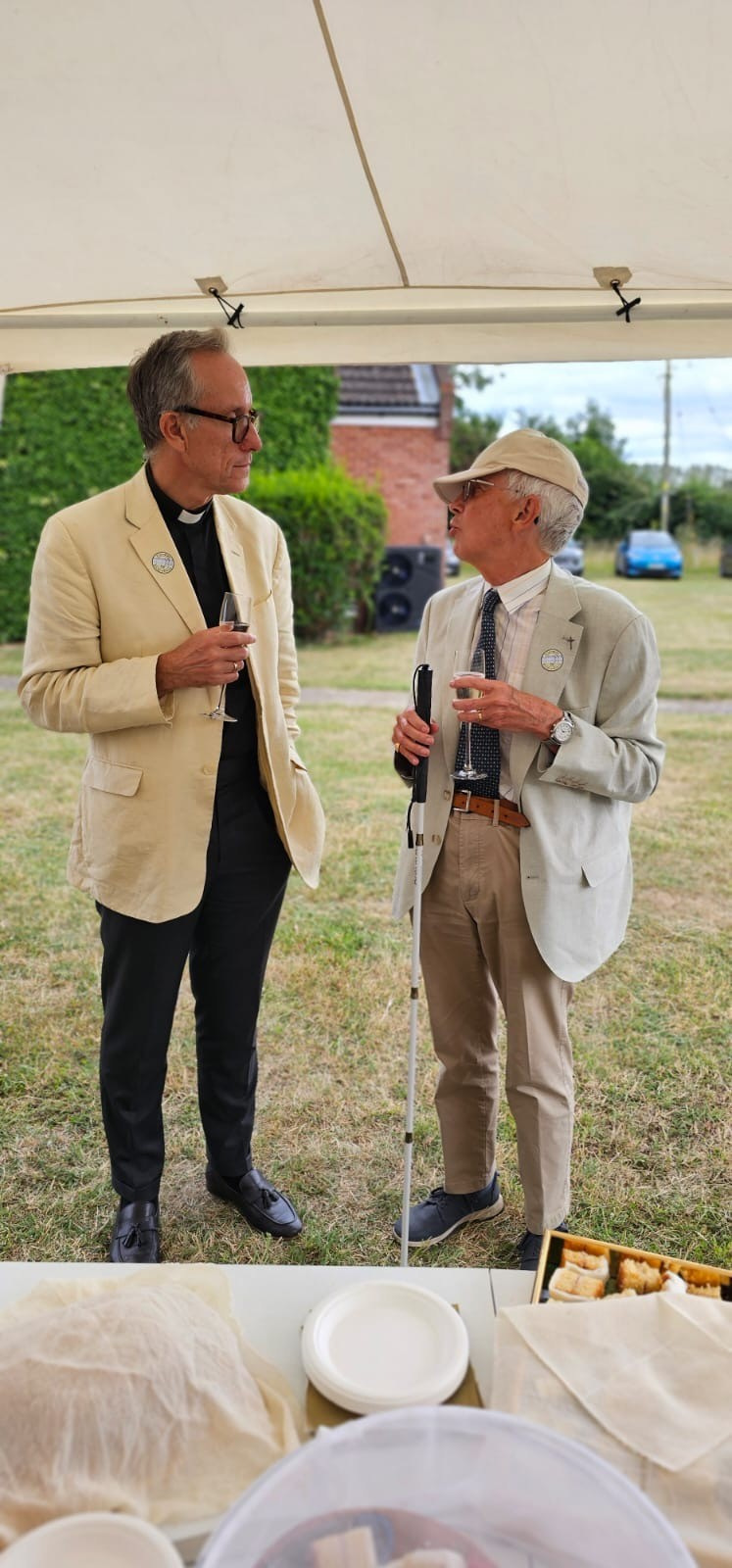
We had chosen 4th July, the principle being that anything our former colonists over the Atlantic could do, we could do better. The major instigator of the Forehoe House of Industry had been Sir Armine Wodehouse from Kimberley Hall. The committee were therefore delighted that his ancestor, John Armine Wodehouse, the current Earl of Kimberley, and the Countess were able to join us for the afternoon. Our other special guests were Father Andrew from Wymondham Abbey and Professor Susannah Ottaway, who is the leading authority on the Forehoe House of Industry.
At 2:30pm, about 90 guests and residents took their seats in front of the main building to hear Dr Hugh Osborne, our Master of Ceremonies, introduce, with some style, our varied programme of speakers.
Opening proceedings, Rachel Kidd, the curator at Gressenhall Farm and Museum, spoke on the importance of Houses of Industry and Workhouses in Norfolk. Then Dr Osborne summarised Mary Garner's excellent dissertation on the Forehoe House of Industry's early years. Professor Ottaway went on to inform us of the working lives of the children living here during this period, before Dr Hilary Matthews provided an overview of the building's different uses over the centuries. In 1776, it was a House of Industry designed to house the aged, infirm, poor and mentally unsound from 23 local parishes. In 1834, the House of Industry became a workhouse; it became a hospital for geriatric patients in the late 1940s-74, a school in the 70s and 80s, and then converted in the late 80s to the 21 private residences which remain today.
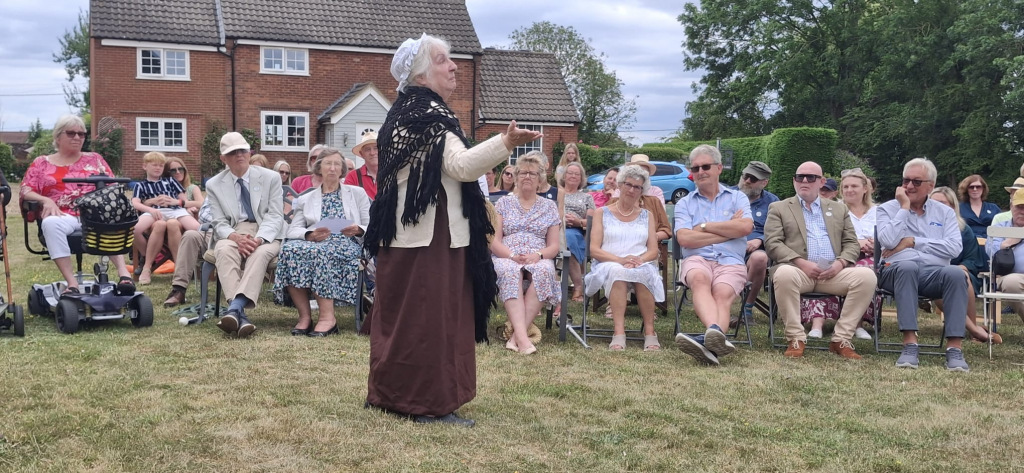
Richard Elliott, our South Norfolk District Councillor, then spoke on the building's importance to the community over the centuries. Some light entertainment was provided by Georgette Vale. Depicting a vagrant called Martha, and dressed in period costume, she acted out Mario Petrucci's poem recalling Martha's overnight stay at a workhouse. Georgette's performance stole the show!
As the event came to its end, the Earl was presented with copies of Sir Armine's letters relating to the establishment of the House of Industry 250 years earlier.
Finally, we arrived at the unveiling of the Victorian bell, which the committee had procured to hang in the small brick structure in front of the main building. The bell, like the building, is a survivor, and Dr Osborne enlightened us on its interesting history before Father Andrew blessed it. It was then rung five times, each ring commemorating 50 years of the building's life.
With the formal event concluded, the Countess of Kimberley cut the commemorative cake, adorned with the committee's 250th logo. Guests ate this cake and drank prosecco whilst chatting with new friends and viewing the display boards, each full of photos and information documenting the building's history.
The pièce de resistance was Janine Everitt's excellent art installation, graphically depicting images of the building, its former inmates, and their handwriting. This proved a great success and talking point.
All in all, this event and the burial of the time capsule went exceedingly well; the weather behaved itself, and everyone enjoyed themselves. Finally, after our guests had left, the committee and other residents held a well-deserved party.
Here's hoping the opening of the time capsule in 50 years and the celebration of the 300th anniversary will be carried out with the same enthusiasm.