

When Peter came out of his study to see what the commotion was, he found his 15-year-old daughter Jeannie kneeling on the floor with her head inside the cupboard under the stairs.
“What is the matter?” he enquired gently, as he watched her frantically flinging objects aside in her obvious search for something.
“It’s my tennis lesson any minute, and I can’t find my racquet! It must be here somewhere – I always put it back in here.”
“Always?” he queried, still in a mild tone. “Where was it...” but she cut him off.
“If you ask me where it was when I last saw it, I shall scream – because if I knew that, I wouldn’t be looking for it now!”
“I think we have a few minutes to find it,” he said. “Shall I have a look?”
She huffed loudly and moved back so that he could bend down in the cupboard doorway.
Eventually, even he had to admit defeat. “No, I’m afraid I can’t see it either.”
“Oh God! I bet Tim borrowed it without asking and hasn’t put it back!” she wailed.
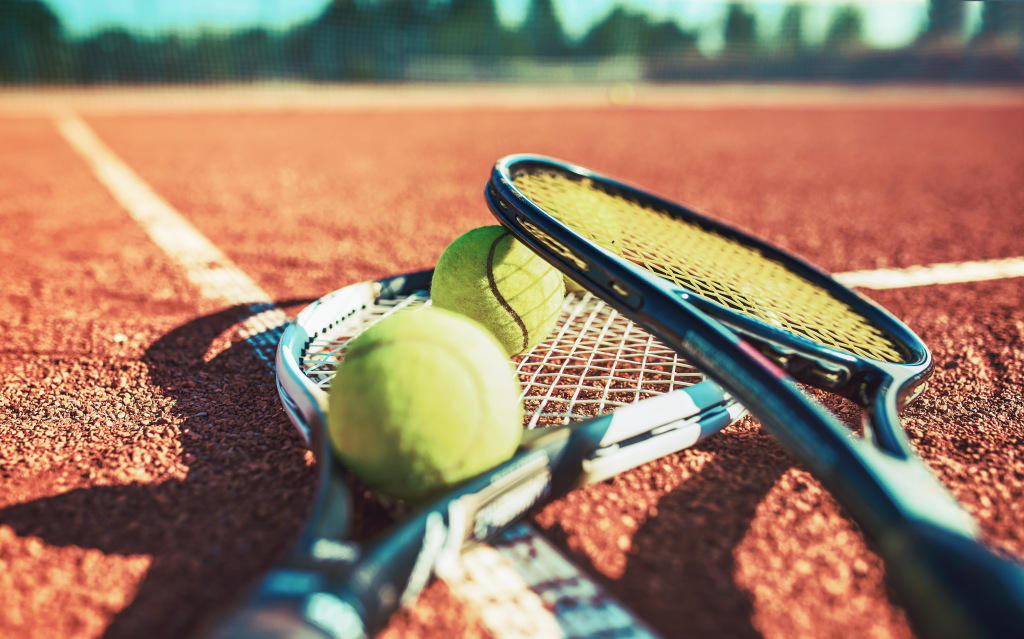
“But,” he went on, “you could use this one,” and he withdrew a slightly battered wooden-framed racquet which he then offered her.
“Whose is that?” she said, greatly surprised. “I’ve never seen that one before”.
“Actually, it’s an old one of your mother’s,” he said, “which I had restrung recently.” He was going to add “precisely because I thought this would happen one day”, but more diplomatically continued, “in case you or Tim had a friend here one day who might also want to play.”
“It must be ancient!” she said, casting a disapproving eye over it.
“She had it when she was your age, so it is quite a few years old,” he said, “but it was a very good make in its time, and with new strings, it’s almost as good as new. In fact, she told me that when her father gave it to her, he had taken her to the best sports shop in town and told her she could have the most expensive model they had.”
“Wow.”
“Well, in truth, he owed her that,” her dad went on, “because everyone had forgotten it was her birthday – or just chosen to let someone else do something about it. She told me she spent the whole day waiting for someone – her mother, brother, anyone - to say “Surprise!”. To give her some presents, or offer her a cake with 15 candles on it. But her family wasn’t really like that.
“Anyway, when her dad came home from work, he asked what was up and she told him. He was so shocked that he immediately took her out to get a new racquet and to buy her afternoon tea. To be honest, that seems to have been his default – he was a great one for a grand gesture after the fact, when really some forward thinking and consideration would have been much more valuable. The only excuse I can find for it is that it was wartime, but ordinary life still had to go on.”
Jeannie looked thoughtful. “I realise that Mum doesn’t really get on with her mother, and she can’t stand her brother Will. But she loved her dad?”
“She did. He understood her, shared her love of books and sport, was proud that academically she was so able that she would be the first one in the family to get to university, and told her so. But he was hardly ever home, often gone for weeks, and then he would suddenly appear, take her off to an expensive restaurant, splash out on a fancy meal, and then dash off again until the next time. Mum used to say that we had such different starts in life.”
“I never met your parents, Dad.”
“No, sadly not, but I had a very happy upbringing. My parents had to work so hard to get by, keep us warm, fed, and clothed, but they did. They never complained. They just got on with it. We never felt that we were going without.”
“So, Mum was surrounded by wealth and conflict, and you were happy but poor?”
“That’s about the size of it.”
Jeannie got up to go. “Thanks for the racquet,” she said, “it will be lovely to use it, knowing it was Mum’s originally. I am sure she’ll laugh when we tell her about it! And thanks for the chat.”
Later, at supper, everyone was asked about their day. “Well,” said 9-year-old Katie, beaming, “I moved up to the next Better English book today!”
“And is it better?” Mum said, smiling.
“What?”
“Your English?”
“Oh, well it must be,” Katie said, rather mystified. “And I nearly forgot, we watched the astronauts landing on the moon instead of doing maths! It was rather a good day really!”
“How was tennis?” Dad asked.
“It was fine, thanks. The racquet was ok by the way, so thanks for that,” Jeannie said. “Did anyone manage to find mine?”
“Yes, you guessed right. Your brother had lost his and borrowed yours – it turned up under his bed. We still have no idea where his is.”
“Lucky for him that he’s not here then,” she growled. “Actually, I told some of my friends about your racquet, Mum, and how you got it for your birthday.”
“Did you?” Mum seemed surprised and glanced across at Dad, who said nothing but returned her look. Jeannie had noticed recently that they did a lot of silent talking like this, and they always seemed to know what each other meant.
“Yeah, they were very impressed that you got a top-of-the-range one, even if it’s rather old-fashioned now.”
“Yes, very lucky really,” she said.
“But your whole family had forgotten your birthday! How could you feel lucky?” Jeannie demanded.
“I mean, I feel very lucky now,” Mum corrected herself, “and you are my family now. I hope you feel lucky too – I learned a long time ago that money doesn’t buy you happiness, even if it can get you a top-notch tennis racquet.”