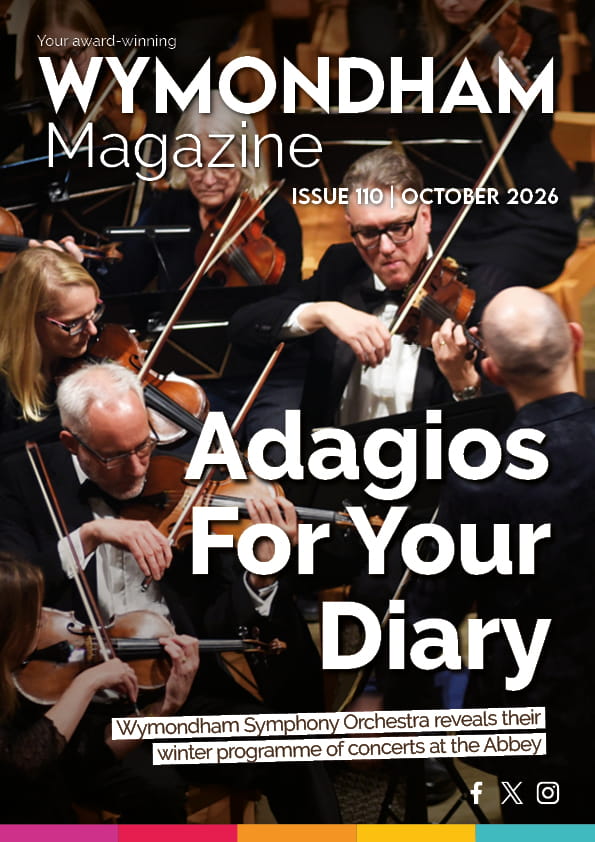


Save the date for Wymondham Symphony Orchestra’s Summer Concert celebrating composers from the New World, on 27 June 2026.
The programme will feature famous 20th-century American composers Gershwin and Copland. The orchestra will perform Copland’s Fanfare for the Common Man and Appalachian Spring. Fanfare for the Common Man may be a familiar tune to many of you because it is often used in TV shows and adapted for various jazz and rock songs, from Woody Herman to the Rolling Stones.
Originally written around the time of World War II as a patriotic gesture, Copland wrote of the Fanfare: “The challenge was to compose a traditional fanfare, direct and powerful, yet with a contemporary sound. To this end, I used bi-chordal harmonies that add ‘bite’ to the brass and some irregular rhythms."
Appalachian Spring was commissioned to accompany a ballet, intended to capture “the pioneer American spirit, with youth and spring, with optimism and hope”. It was originally scored for an ensemble of 13 instruments, since the premiere was in a small auditorium. He later arranged a suite from the ballet for a full orchestra, which won the Pulitzer Prize for music.
The Suite is cast in eight uninterrupted sections. It opens with a slowly blooming introduction, which unison strings burst into in an elated Allegro. The scenes that follow move from a warm, gentle duet for the pioneering couple, through fleetly fiddling dances for a revivalist preacher and his followers, to an animated dance of anticipation for the bride. A transitional interlude recalls the opening before the Suite’s climax, a set of variations on the Shaker hymn “Simple Gifts,” which supported scenes of rustic domesticity in the choreography. In the coda, the married couple are left alone in their new home, with tender music that bookends and fulfils the opening expectations.
During his lifetime, George Gershwin was arguably the most successful and talented of America's composers. He had the ability to absorb the sounds and energy around him and distil them into music that immediately connected with audiences. His Cuban Overture is a great example of this. The 1930s saw the rise of the rumba craze in America, and Gershwin, ever eager to immerse himself in new musical experiences, was keen to go to the source. So he sailed with a handful of friends to Havana, Cuba, where he absorbed the catchy tunes and tempos of popular songs played in the bars.
The Overture includes authentic Cuban percussion instruments: a bongo drum, claves, maracas, and a gourd shaker. These latter instruments were so important to the piece that he insisted in the score that the percussionists be placed in front of the orchestra, rather than their traditional position in the back.
Gershwin’s Rhapsody in Blue stands out as one of the great symphonic contributions of 20th-century classical music, certifying its author’s place in the history books as one of the most celebrated American composers of his era. Despite its fame, Gershwin only found out he was supposed to be writing the piece the month before its premiere, the framework coming to him in a single train journey.
The iconic clarinet opening wasn’t actually written by Gershwin. He originally started the piece with a simple scale for solo clarinet, but his clarinettist Ross Gorman decided to play a dramatic glissando up to the top note during a rehearsal. Gershwin was immediately impressed and asked him to repeat the technique in the premiere performance.
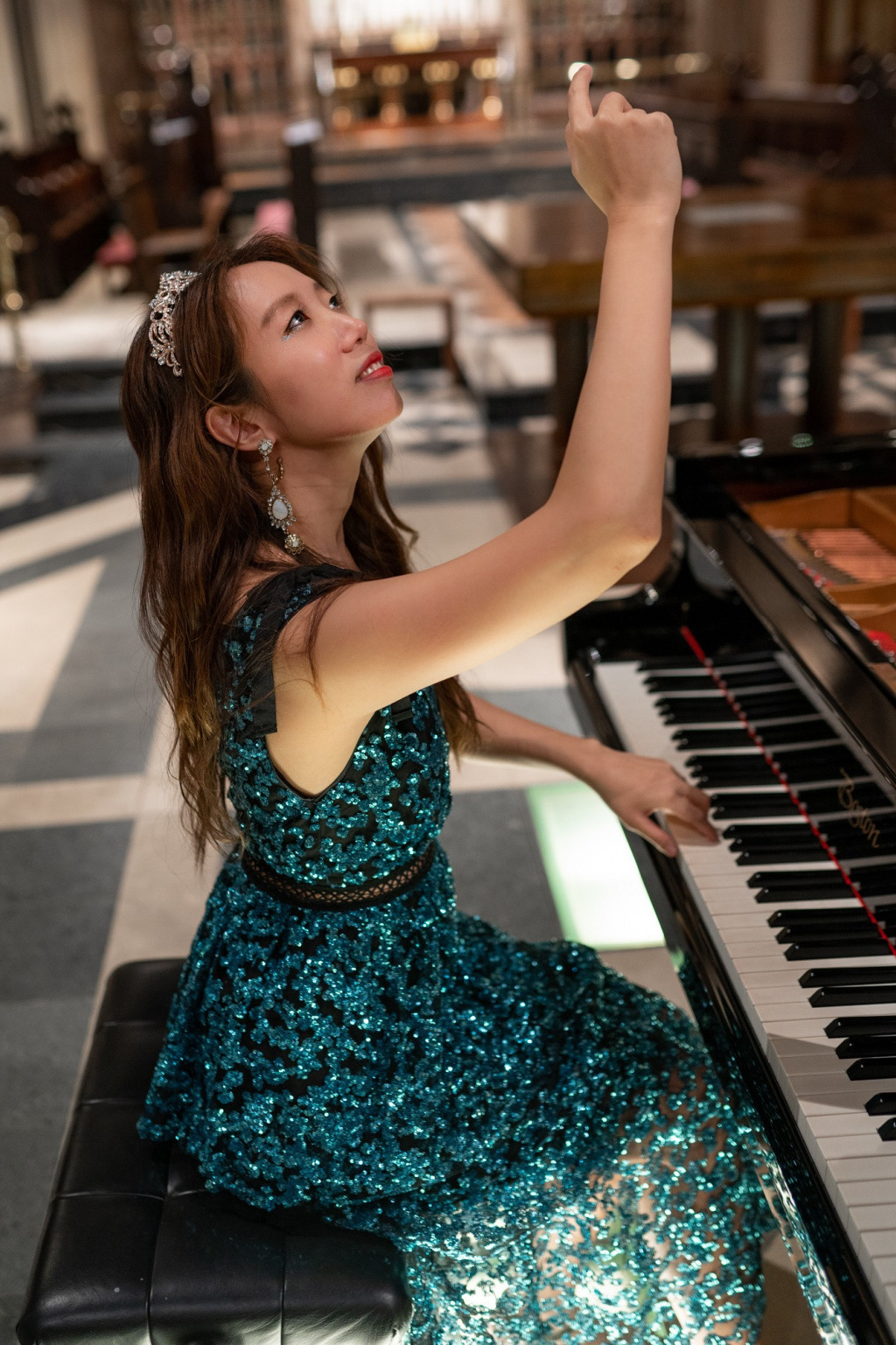
The piano solo in Rhapsody in Blue will be played by Sohyun Park. Born in South Korea, Sohyun moved to the UK at age nine, where she began studying the piano. She progressed with stunning speed. By the age of thirteen, she had been accepted to the prestigious Chetham’s School of Music in Manchester. After graduating, Sohyun was awarded a scholarship to the Royal College of Music. In 2011, Sohyun was named the Norfolk Young Musician of the Year, and she has won numerous awards at a variety of music contests. Alongside competitions, she has been hailed as a “most impressive” performer by the Evening News and her performances are applauded for their emotional breadth and exquisite narrative scope. She has toured professionally both throughout the UK at venues such as The Royal Albert Hall, St. James Piccadilly and on international stages (Turkey, Bulgaria, Estonia, Italy, France, Germany, Reunion Island, Russia and the US). She has been performing concertos with orchestras such as the Nice Côte d’Azur Symphony Orchestra and the Danube Symphony Orchestra. She is also currently a professor at a prestigious Russian Music School in London, coaching many talented students around the world.
Tickets are available online here, or if you prefer a hard copy, there are tickets available at the Wymondham Abbey shop. Get your tickets early to avoid disappointment! Prices are £15, Friends of the WSO £13 and under 18s are free.
Want to get involved?
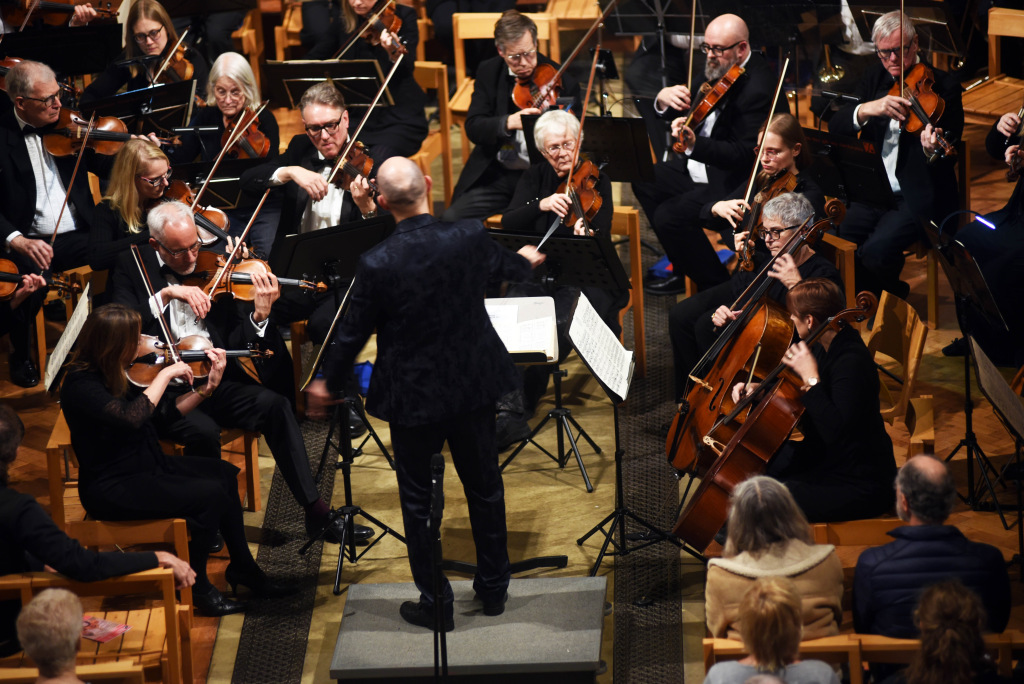
We’re a friendly group playing fantastic symphony repertoire with regular rehearsals at Central Hall in the heart of Wymondham. If you’re interested in joining the orchestra we’d love to hear from you. In particular, we’re on the lookout for viola (grade 7 or above), double bass, trombones, and percussion players. More details about the orchestra and how to join can be found on our website.
Discounted tickets?
Join the Friends of Wymondham Orchestra to get tickets at a discounted price, seat reservations, and orchestra news. Find out more on our website.